
Like any flourishing garden, true professional growth takes time, care, and a lot of shared wisdom. In June, DIEEC staff, child care educators, and Delaware Cooperative Extension Master Gardeners gathered to mark the culmination of the second Let’s GROW Outside! cohort. Funded through a continuing collaboration between DIEEC and the Delaware Department of Education (DDOE), this eight-month experience paired early childhood programs with grant-funded gardening supplies, specialized curriculum, and hands-on guidance from UD Cooperative Extension.
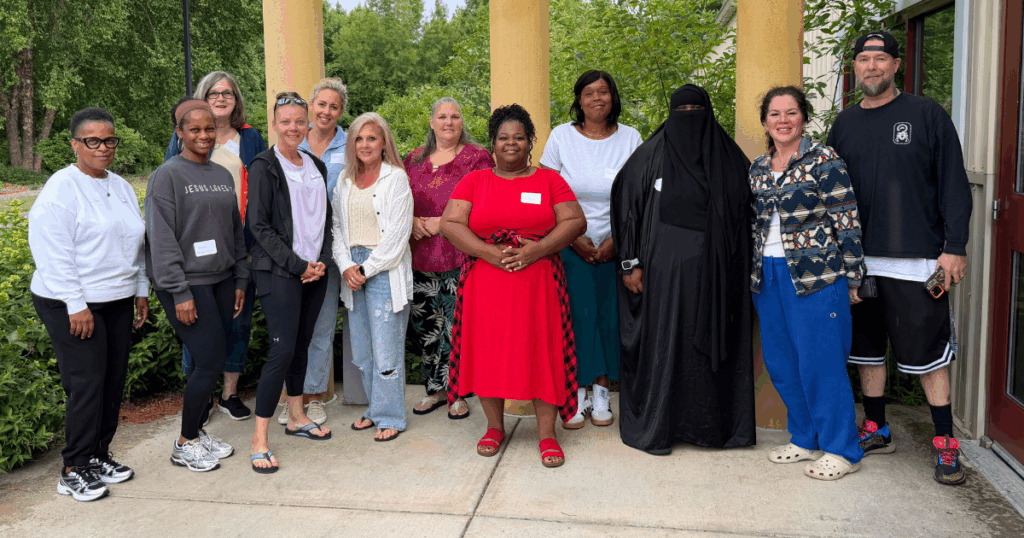
At the final wrap-up event, participants shared their programs’ journeys from empty lots to child-centered green spaces. The day’s most powerful moments came from the lessons these educators uncovered together. Here are some of the core takeaways and practical strategies shared by this year’s cohort.
1. Gardening Works Anywhere (No Yard Required)
Space constraints don’t have to limit outdoor learning:
- Paved & Concrete Areas: Tykiesha Raison (Lend a Helping Hand Child Care) transformed a concrete patio and some green space using grow-bags and tiered beds.
- Coastal Conditions: Kenna Chanoux (Margaret H. Rollins CDC @ Children’s Beach House) adapted to harsh salt, wind, and excess heat by upcycling construction pallets into vertical herb planters and using mobile grow-bags.
- Multi-Use Layouts: Dawn Perry-Schafferman and Patrick Schafferman (Dawn’s Large Family Home Child Care) are transforming their garden into a multi-bed “Munchkinland,” intentionally mapping out garden paths to incorporate sand and water tables, along with play space.
Master Gardener Coordinator Tip: Mobile grow-bags let you test different spots for ideal sunlight and wind protection throughout the season without committing to a permanent bed location.
2. Prioritize Sensory Play & Child Ownership
When children lead, gardens become hubs of engagement and self-regulation:
- “Please Touch” Gardens: Cindy Jones (Room to Bloom) planted a front yard bed with aromatic lavender and sage, creating an interactive stop for families at pick-up and drop-off.
- Personal Stake: Nadinena Smith (Nana’s Touch of Joy) had each child paint their name on individual cinderblocks to mark their personal spot in the garden.
- Calming Spaces: Ashley Stanford and Tracey Wilson (Little Arrows Childcare) noted the garden served as a peaceful spot for children needing a quiet moment, where older school-agers read to toddlers in the shade and harvested mint (“It smells like toothpaste!”).
3. Embrace Unplanned Shifts & Cross-Curricular Learning
In a garden, unexpected surprises go hand-in-hand with intentional teaching:
- Investigating Nature: When Nadinena’s strawberry plants died off and unexpectedly rebounded, the children put on their scientist hats to hypothesize why.
- Hands-on Math & Literacy: Tykiesha integrated learning directly into garden routines- having children count seeds inside bell peppers for math and keep personal observation journals. When unsprouted green onion seeds yielded unexpected mushrooms instead, it added a twist to their garden checks!
- Coexisting with Wildlife: Programs embraced teachable moments with local nature, from observing a yard bunny nest at Room to Bloom to skipping chemical treatments at Gale Dutton’s Riverview Place.
4. Clever Solutions for Everyday Challenges
The final session also included lots of sharing of practical garden hacks:
- Weed Control: Educators discussed reusing cardboard boxes on the ground to suppress weed growth.
- Pest Defense: Master Gardener Coordinator Carrie Murphy recommended laying chicken wire flat under soil to stop digging cats and squirrels, while Ashley used a fake owl to deter neighborhood pests (though she said that “the bunnies were not fooled!”).
- Water Access: Shamanda Rice (Little Village Home Daycare) installed rain barrels near her beds to eliminate long hose runs. At Riverview Place, children used turkey basters and halved bamboo stalks as “ramps” to water plants independently.
- Smart Layouts: Advice from DDOE’s Scott Schuster helped Ashley realize taller plants belong on top tiers so they don’t shade lower crops like strawberries.
5. Growing Family & Community Connections
The impact of the initiative extends far beyond the garden bed:
- Family Engagement: Positioned right outside a large picture window, Shamanda’s garden allowed families to track plant growth together from inside or outside the facility.
- Shared Pride: Educators across the cohort reported that parents frequently stopped to check on progress, donated seeds, and celebrated fresh harvests sent home with their children.
The final Let’s GROW Outside! session demonstrated that the initiative does far more than help programs grow fresh fruits and vegetables. It fosters supportive professional networks, strengthens family engagement, and gives Delaware’s youngest learners hands-on opportunities to build confidence, practice mindfulness, and discover where their food comes from. We can’t wait to check in with our participating programs this fall to hear about their harvests!
Written by Stephanie Thompson, Photo by Christian S. Ferrell, DIEEC